
Muzzamil Shahzad - MP Materials
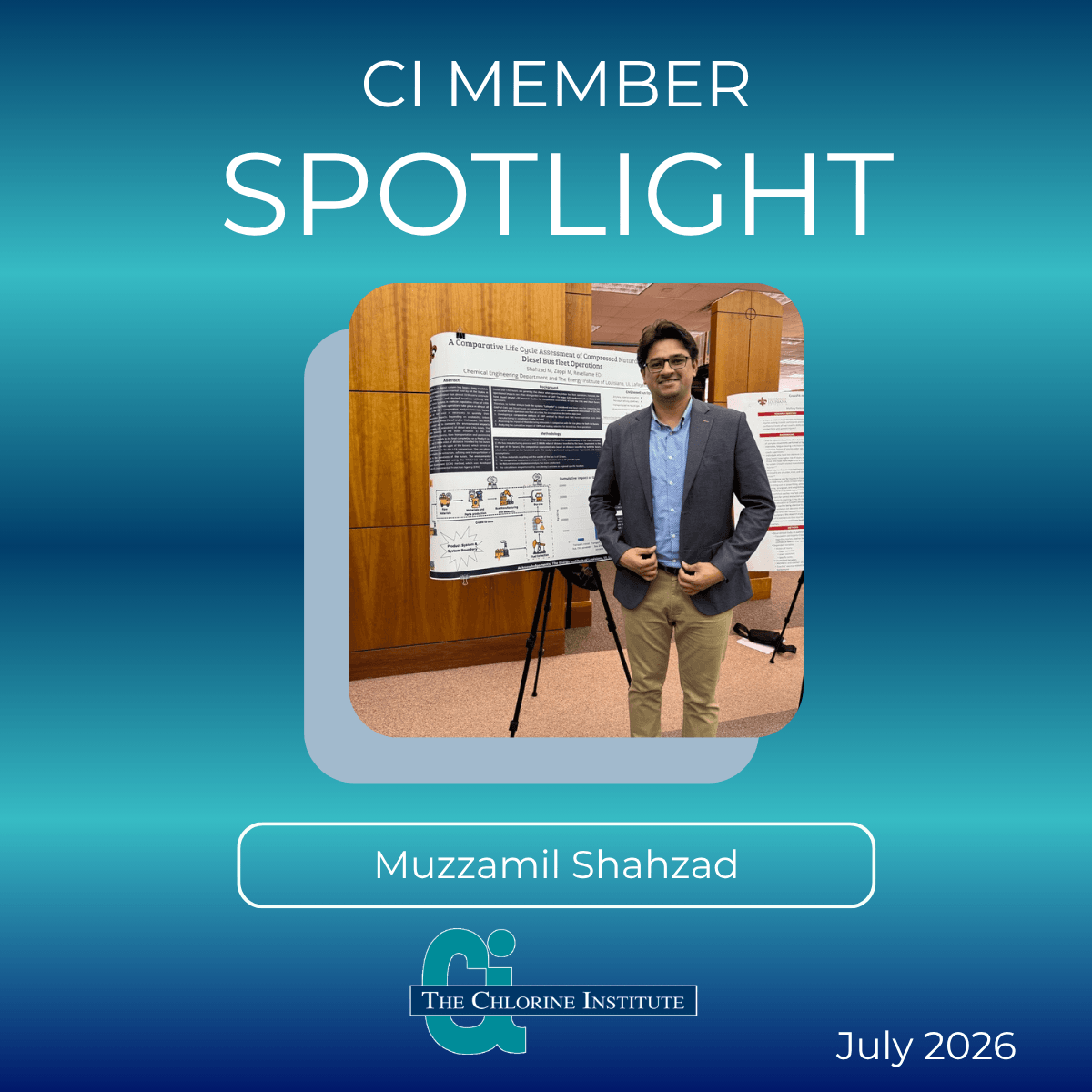
This month, The Chlorine Institute is pleased to feature Muzzamil Shahzad, Senior Engineer at MP Materials. Muzzamil has been an active CI member since 2022 and was instrumental in helping bring MP Materials into the CI community. His career reflects a commitment to process safety, operational excellence, and advancing critical mineral processing through collaboration and continuous learning.
Tell us a little about yourself:
Muzzamil Shahzad is a Chemical Engineer with experience spanning the chlor-vinyl chain, chlor-alkali operations, utilities, power generation, process safety, and the integration of these disciplines with rare earth minerals processing.
He currently serves as a Senior Engineer at MP Materials, where he supports the commissioning and optimization of chlor-alkali systems that contribute to strengthening the domestic rare earth mineral supply chain in the United States. Prior to joining MP Materials, Muzzamil built extensive experience with Engro Polymer & Chemicals Limited in Pakistan, working across chlor-alkali, EDC-VCM, utilities, and power generation. During his tenure, he led and supported several major initiatives, including the elimination of an evaporation pond, commissioning three zero-gap electrolyzers, revamping the plant load management system, and participating in multiple risk-based assessment studies.
Muzzamil holds a Master of Science in Chemical Engineering from the University of Louisiana at Lafayette, a Master of Engineering Management in Chemical & Process Management from NED University of Engineering & Technology, and a Bachelor of Engineering in Chemical Engineering from Mehran University of Engineering & Technology. He is passionate about process safety, process systems design, and sustainable chemical processing.
Years Involved at CI and What You Have Been Involved In:
Muzzamil has been involved with The Chlorine Institute since 2022. Throughout his membership, he has led several projects utilizing CI technical pamphlets, including sodium hypochlorite plant automation using Pamphlet 96, standardization of chlorine gas detectors using Pamphlet 73, and standardization of chlorine gas piping using Pamphlets 6 and 100.
In 2024, he presented a technical paper during the CI Technical Symposium, discussing the challenge of high oxygen liberation during the first startup of zero-gap electrolyzers.
What Is Something Interesting About You That Few Know or Would Guess?
Although Muzzamil has spent nearly a decade working in the chemical industry, he has developed a deep passion for critical minerals and mineral extraction. His graduate research focused on evaluating Direct Lithium Extraction (DLE) technologies, including a comprehensive review of available methods and the selection of solvent extraction as the most promising approach for further development.
Today, that interest allows him to combine his chemical engineering background with rare earth mineral processing, bringing together two industries that play increasingly important roles in advancing clean energy technologies and domestic manufacturing.
Tell Us About Your Favorite CI Memory or Success Story
One of Muzzamil's favorite CI memories was presenting at the 2024 Technical Symposium. Although he was unable to attend in person due to visa appointments, CI encouraged him to deliver his presentation virtually, allowing him to share his work with industry peers despite the travel challenges.
What Do You Value Most About Your CI Membership?
"The technical correspondence and literature available through CI are an enormous resource. No other standards organization focuses specifically on the unique hazards of the chlor-alkali industry the way CI does. Having access to these pamphlets gives engineers confidence that modifications, procedural changes, and engineering decisions are based on proven industry practices."
What Advice Do You Have for Early Career Professionals in the Chlor-Alkali Industry?
Muzzamil encourages new engineers to build a strong foundation in the core calculations that drive chlor-alkali operations, including power requirements, production balances, energy indices, and utility ratios.
He also stresses the importance of following recognized engineering best practices for chlorine piping, monitoring electrolysis power ratios daily, and performing routine efficiency evaluations of electrolyzers. Combined with maintaining excellent brine quality, these practices help maximize equipment reliability, allowing membranes to achieve service lives of approximately four years and electrolyzer elements to remain in service for eight years or longer.